- Sustainable Data Center's Newsletter
- Posts
- How Hackers🕵️Ruin Your Reputation and steal your Wealth for Under $200
How Hackers🕵️Ruin Your Reputation and steal your Wealth for Under $200
Damaging Your Image and Wealth Is Cheaper Than Ever. Why Prevention Alone Isn’t Sufficient, Though Awareness Sets the Essential Baseline.

The Internet of Values
March 16, 2025
The Cost to destroy your reputation is under $200.
The cost to steal your fortune is under $200
You already late to take control of your AI tools
Digital prison coming soon to Europe (CDBC)
NO TIME TO READ? DOWNLOAD ⬇️
The Cost to destroy your reputation is under $200

Hackers list Groups claiming X cyber’s attacks
The recent hacker attack on X reminds me of a similar experience I witnessed firsthand years ago. Many people may not realize that well-known brands are frequent targets of cyberattacks. It’s a widespread tactic—often driven by political, social, or ideological motives done by hackers. Either hired, or acting for their own pleasure, they launch DDoS attacks (among other methods) against the digital platforms of these brands, or companies.
The goal? to scare and damage them on orders from those seeking their downfall.
Cyber attacks aimed at ruining your reputation typically fall under a category known as "reputation-based attacks" or "defamation attacks." These are malicious actions carried out in the digital realm with the intent to damage an individual’s, organization’s, or entity’s public image, credibility, or trustworthiness. Unlike attacks focused on stealing data or money, these are psychological and social in nature, leveraging misinformation, humiliation, or manipulation to achieve their goal. Here’s a breakdown of how they work, common types, and their mechanics.This week, starting March 10, 2025, X faced severe attacks that left users unable to access their profile tweets. Unlike previous incidents, these attacks were openly claimed by the 'Dark Storm Team,' a group with a public Telegram account showcasing their service prices for all to see. Details below.

Prices’ services list from Dark Storm Team
Substantially, DDOs attacks are when your website, application, or social account but more broadly, any digital channel that can be reach through internet, is bombarded, at the same time, by a huge amount of requests to the server where your website is hosted.
DDos attacks are intentionally done for a long period of time to make your website inaccessible. I did personally experienced this situation that kept continued for months. It is a huge effort that you have to dedicate fully to make sure those requests are either blocked, or continually killed. These type of operations cost an enormous amount of money to clear them up. Cyber attacks of this type are done as warning, they want to let you know that you are in their hands.
I was stunned to discover how cheap and accessible these services are—anyone can pay just $25 to attack a protected website for a day, $60 for a week, or a mere $250 for a full month!
What people don’t seem to grasp is this: If you say or do something someone dislikes, it costs almost nothing to send a warning shot and turn your life into chaos for a month—all for just $250!"
DDOs attacks are the easiest thing that an hacker can do. Also a 12 year old nerd, can learn how to do it.
With the current geopolitical climate, and considering that it’s easier than ever for people to invade your privacy, or attack you online— Why? Because of things like social media, cool AI tools that can do magic at the cost of your privacy, scams popping up every day (like phishing emails), and other threats. If this doesn’t scare you yet, it probably should—you’re more vulnerable than you think
Reputation-ruining cyber attacks exploit online platforms, communication channels, or vulnerabilities to spread false, embarrassing, or harmful content about a target. The attacker’s goal is to erode trust, provoke outrage, or isolate the victim socially or professionally. These attacks often rely on the viral nature of the internet and human psychology (e.g., outrage, gossip) to amplify their impact
The cost to steal your fortune is under $200
Your email, your addresses, your phone numbers is out there for people to find.
How have bad actors stolen $300m+ from Coinbase accounts? They do it through hacking people’s brains.
A scammer knows all they have to do is engineer fear and a fake sense of urgency. I break down how it works below 🧵
— Nick Neuman (@Nneuman)
5:08 PM • Mar 3, 2025
Back to the hackers menu services under the sun that shocked me, the other service they provide, for basically nothing, is the dump of the databases.
5 data base dump from protected company, airport, bank ‘s data bases start at $200This means that you can ask to get access to a data base of your choice, as they candidly suggest, a bank, airport or wherever people contacts are stored, number, email…for just $200!
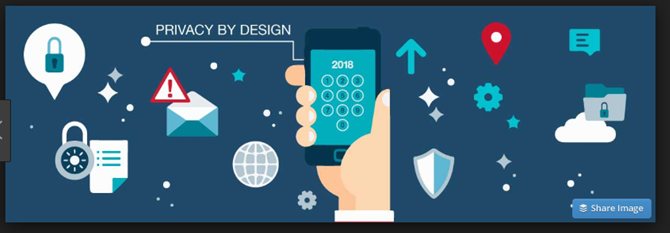
Now, is it so easy to access to these data bases? Theoretically speaking IT systems should be designed and build with privacy and security by design, and maintained thought the years following these best practices. Also, now a days is a common practice that with a certain frequency systems are been subject to penetration tests. You pay cybersecurity professional experts that simulate attacks to find holes in your IT systems so that you can fix them, which sometimes takes time.
The reality of the fact is that, although some of those practices are also mandatory weather by low (like for example GDPR) or for compliance to certain standards, or industry specific certifications, there is always a combination of human factors that makes impossible for any IT system, in the universe, to be impenetrable.
You are already late to take control of your AI tool
Last week I wrote about the difference between the passive and active way of using AI. Today, every organization engages with AI, whether actively or passively. One of the most critical aspect of adopting new technologies, it is not the technology per se. It is ensuring compliance with geographically specific regulatory frameworks, security measures, and industry-specific standards, best practices, and certifications.
When it comes to AI, the level of standard for scrutiny in these areas must be exponentially greater. What I mean with "passive" AI use refers to the illusion of simply using an AI service—often at no cost—while, in truth, we are the ones providing a free service by training models we don’t own, surrendering our data and expertise to an external entity that may later use it to compete against us.
You also, unknowingly, grant access to AI agents to your credit card, your phone, your personal identification, your social security…
This week a viral tweet explained more eloquently what i mentioned above. It is worth to listen what she said: Signal President Meredith Whittaker (@mer__edith) warns of "real danger" in agentic AI hype. Signal is an end-to-end encrypted messaging app. Privacy isn’t an optional mode, it’s just the way that Signal works.
SIGNAL PRESIDENT: WE'RE GIVING AI ACCESS TO WAY TOO MUCH INFORMATION
Signal President, Meredith Whittaker:
"I think there's a real danger that we're facing, and Signal is clocking this pretty closely—the introduction of agentic AI into our devices.
The value add is something… x.com/i/web/status/1…
— Mario Nawfal (@MarioNawfal)
4:20 AM • Mar 11, 2025
Digital prison coming soon to Europe (CDBC)
We are already not in control of our bank accounts, as I wrote in Cash Will Disappear: Power Lies With Money Control, mentioning a forecast done in 2016 by Andreas Antonopoulos. Our bank account can be sized, freeze, we don’t own our money and the worth is that the perception of this is really little, until something happen to your bank account that makes you realize the reality.
Today, when we pay for goods or services without cash, we rely on financial intermediaries—Visa, Mastercard, PayPal, Venmo—each operating within a banking system that is ultimately controlled by central banks. These central banks, government-owned, regulate monetary supply, set interest rates, and act as lenders of last resort.
Corporations → Bank → Central Bank → Governments
Ownership is an illusion, especially in the digital world.
If we combine just a minimal part of cyber security risks and privacy threads with invasive power of the technology and their pervasive presence in our daily life, we ended up understanding that the dystopian world of sci-fi 1984sh, is not far away.
Money and state should be separated to protect individual liberty and prevent economic tyranny. When the state controls money, it gains unchecked power to manipulate wealth, surveil transactions, and suppress dissent by cutting off financial access. A government with such authority can devalue currency at will, erode savings through inflation, or freeze assets to punish opposition—stifling free speech and autonomy.
Separating money from state control, like through decentralized systems, or private currencies, ensures individuals retain sovereignty over their earnings and choices. It limits the state’s ability to weaponize finance against its citizens, fostering a freer, fairer society where power isn’t concentrated in the hands of a few
Every day, we feed into centralized systems. Our phones quietly listen to every word we say. The content we see is carefully tailored, shaped by the hints we unknowingly drop in daily conversations held right in front of our devices.
Alexa it is not for free, facebook is not for free, google is not for free, chat gpt is not for free and the worst of every evil, CDBC, are securing us to a totalitarian slavery.
Conclusion
Ask every cybersecurity expert. They all will tell you the same thing:
The only thing that can’t be hacked is OFFLINE, but as soon as you plug it up, you are back at square one!
The cost to destroy your reputation is shocking cheap but the price to clear up the situation is astonishing high, and sometimes irreversible.
On the other end, privacy is priceless, but running a system that prevent your data to be stolen is really expensive.
The combination of privacy and security threads with a banking system that control your money it is an attack to your freedom and an intentional subtraction your our human rights
When you brush off protective steps as too tedious to notice, too pointless to matter, or too costly to bother with—smirking, 'What could ever touch me?'—stop and rethink, for trouble waits just beyond your blind spot!
READ: what does it mean to build systems with privacy and security by design?
Reply